
Quantum computing, FUD, or real risk
Quantum computing risk A new type of computer is on the horizon: a quantum computer. This has been labeled the […]
Quantum computing risk A new type of computer is on the horizon: a quantum computer. This has been labeled the […]
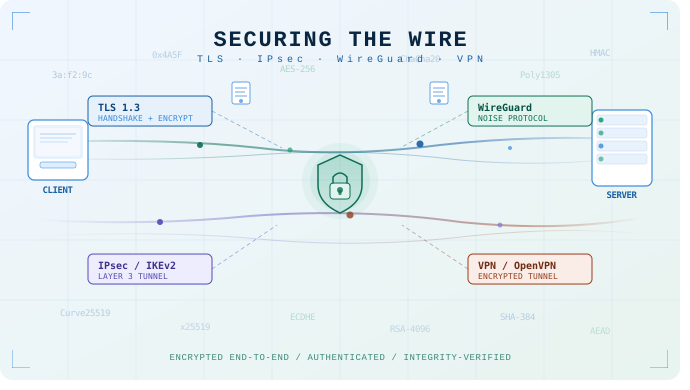
In this article, we go over connection security and give you a good sense of what it can and cannot do. These are classified into two categories: browser connections and Virtual Private Networks, or VPNs.
We also explain how TLS and public key cryptography work. Additionally, we mention where end-to-end encryption (or E2EE) fits in.

Introduction FUD stands for “Fear, Uncertainty, and Doubt,” referring to individuals who engage in fearmongering disguised as helpful advice. In

Introduction Much is being written and discussed about Artificial Intelligence (AI). Some are very positive, while some are very doomsday-like.

Sigurður Gísli Bjarnason Introduction Compliance requirements are a hot topic at all the cybersecurity events I attend these days, so

Introduction In this article, I will discuss FUD, why it is a problem, how to identify it, and what to

Introduction Presenting the Ten Commandments of Infosec. Here are ten things everyone can do today to improve their cybersecurity posture,

Introduction In this article, I want to go over how one might classify all the different Cybersecurity Consultancies out there

In This article we explore the importance of multi-factor authentication (MFA), also sometimes referred to as two factor authentication (2FA).

Network segmentation is one of the fundamental concepts in cybersecurity and the term micro-segmentation is thrown around a lot. But what exactly is network segmentation and how does it help your security posture?

